
Kankakee 72-Hour Release Status
Research on July 16, 2026 found no official Kankakee County 72-hour released-person feed. The Sheriff inmate-search landing points to a system for people in local custody. Tyler offers booking-date controls and an In Custody checkbox, but it does not offer a released-only or rolling three-day control. Tests returned only records marked “In Custody: Yes.”
A three-day search still has value as an organized verification period. It can include a Friday court order processed later, a weekend discharge, and a Monday update without assuming they occurred at the same instant. Search each day’s evidence and keep retrieval times. The lack of a public feed does not mean no releases occurred.
Check Kankakee Three-Day Releases
Build the window from verified person-level events. Do not compile names merely because they vanished from the roster. For a same-day event, the 24-Hour Release List uses a narrower workflow.
- Record the start and end of the 72-hour period, including local time.
- Search the current Tyler roster and save booking, subject, and docket numbers for relevant known bookings.
- Review Illinois VINE events and the Circuit Clerk portal for each person, noting whether an alert says release or transfer.
- Call Corrections at 815-802-7200 for a closed custody question when the status remains unclear.
- Request the Sheriff’s completed discharge or transfer timestamp and receiving agency for documentary confirmation.
The court docket provides the legal basis, such as a pretrial release order, sentence, probation order, or mittimus. It does not prove the precise time jail staff completed the physical movement. Other holds may delay or redirect the person.
Kankakee Three-Day Record Fields
Since no official list exists, these are the fields needed to construct a defensible check for a known person. Preserve exact labels. A Scheduled Release Date is not the same as an actual Release Date.
| Field | Use in a 72-hour check |
|---|---|
| Booked name and number | Matches the event across jail, court, VINE, and a records request. |
| Booking date | Shows intake, not release. |
| In Custody flag | Shows the roster status when retrieved. |
| Release Date | Can record a completed county event when populated. |
| Scheduled Release Date | Shows an expected date subject to change. |
| Transfer destination | Identifies continued custody under another agency. |
| Docket and disposition | Connects the custody event with court authority. |
The Sheriff’s record is the best source for physical exit. The filed court order is best for legal authority. VINE is a notification layer dependent on agency feeds. Agreement across independent sources is stronger than repeated data copied from one feed.
Kankakee Weekend Release Checks
No sourced Kankakee rule promises early Friday release or a fixed weekend schedule. A court action, cleared hold, sentence credit, and jail processing can occur on different dates. A three-day window reduces the chance that a search bounded by one calendar day misses the completed movement, but it cannot supply an event that the public interface does not retain.
Use the Kankakee County released inmate lookup when the goal is one named person. Call before traveling for a pickup. Staff can address current physical custody, although exact historical fields may require a written request. Do not assume that a holiday or weekend automatically changes a projected date.
Kankakee 72-Hour FOIA Fallback
The current Sheriff FOIA page instructs email requesters to put the full request in the message body sent to foiakcso@kankakeecountyil.gov. It says attachments and embedded links will not be opened or processed. Provide the booked name, booking or subject number, approximate intake period, and docket when known. Ask for electronic delivery of the actual discharge or transfer date and time, recorded authority if maintained, and receiving agency.
A narrow date range helps staff locate the record without turning the request into an open-ended question. If a portion is withheld, ask for the nonexempt fields that can be separated. The Sheriff record can establish when local custody ended, while the court portal can show why the court authorized a change.
Kankakee Release Data Retention
No public update cadence or post-release retention period was documented for Tyler. During testing, clearing the custody filter did not produce a dependable archive of completed bookings. Save the booking number, subject number, scheduled field, court docket, and arrest agency while a live detail is visible. Those identifiers make later calls and written requests more precise.
The official Tyler interface shows the local search structure and the roster quirk.
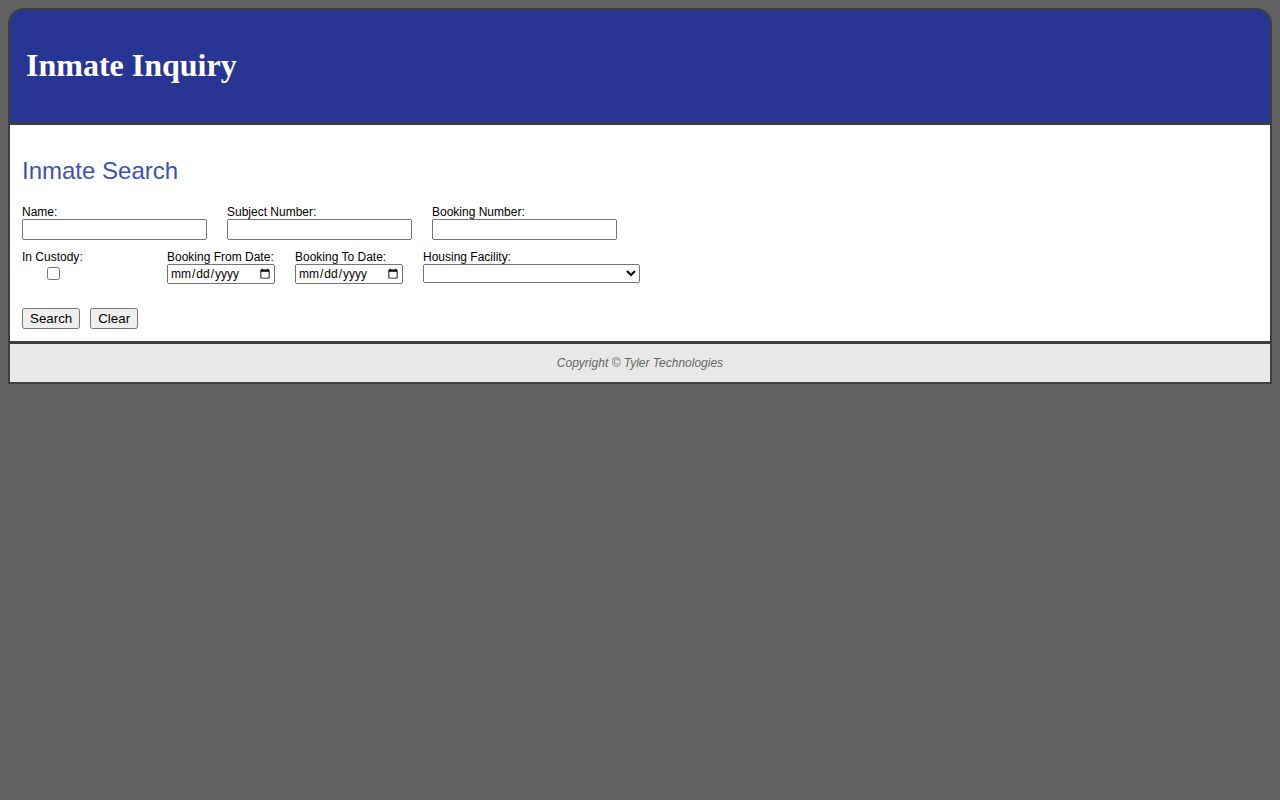
The screenshot should be read as current-custody evidence. It does not depict a 72-hour release feed or prove how long a completed record remains searchable.
Kankakee Release Destination Paths
Leaving a Kankakee bed can mean community discharge, IDOC commitment, another-county transfer, or federal movement. For an IDOC commitment, use the state offender search after intake posts. A Parole Date can show later prison release to supervision, while Projected Discharge Date concerns the expected end of the commitment. Neither field should be substituted for the county’s earlier transfer time.
- Community discharge
- The county custody event ends without a receiving jail or prison agency.
- Transfer
- Another custodian receives the person.
- Probation
- A court sentence supervised locally, verified through the case and probation office.
- Parole or MSR
- Community supervision after IDOC prison release.
When the destination is not confirmed, state only that the person is no longer shown in Kankakee custody. That phrasing preserves the difference between evidence and inference.
Reconcile Kankakee Release Dates
A three-day check often includes several dates for one event. The court may enter an order first. The jail can complete discharge later. VINE may post after the originating feed updates. Keep all three timestamps rather than forcing them into one release date. For physical exit, prefer the Sheriff’s actual discharge or transfer time. For legal authority, prefer the filed court order.
If the order and movement do not match, investigate processing and other holds. A state mittimus, warrant from another county, or federal authority can keep the person confined after Kankakee custody ends. The correct description is transfer when another custodian received the person. A missing roster result cannot distinguish that path from community release.
Scheduled dates require care. Tyler’s Scheduled Release Date is prospective. An actual Release Date reflects a completed event when populated. IDOC’s Parole Date concerns release from state prison, while Projected Discharge Date refers to expected completion of the state commitment. Do not merge those labels into the county’s 72-hour period.
Prepare Kankakee Release Requests
Gather the full booked name, date of birth if safely known, booking or subject number, arrest agency, approximate intake date, and court docket. Avoid sending more personal data than needed. Ask for existing electronic fields instead of asking staff to research a broad narrative. A focused request can seek the actual discharge or transfer timestamp, recorded authority, and destination.
If the Sheriff denies or redacts part of a responsive record, the response should identify the exemption and responsible person. Ask whether nonexempt fields can be separated. Illinois’s Public Access Counselor may review qualifying FOIA disputes. Follow the current response for appeal steps and deadlines.
An inaccurate field should go first to its owner. The Sheriff controls custody entries, the Circuit Clerk controls docket entries, and IDOC controls its commitment profile. Correcting a date is not the same process as asking a court to seal or expunge a record.
Build a Kankakee Three-Day Log
Keep one row per person and custody event. Record the roster retrieval time, In Custody value, booking number, court docket, VINE message, and any Sheriff confirmation. A second booking for the same person is a separate event and should not be merged with the first. Tyler can mark multiple bookings, which makes the booking number more dependable than a name alone.
Review the log at the close of the period. A person still marked in custody is not a release. A person absent without a completed record remains unconfirmed. A Sheriff discharge time supports local release, while a receiving-agency field supports transfer. Court orders add legal context but do not replace the movement timestamp.
This approach also exposes feed lag without guessing at a publication schedule. If VINE posts after a Sheriff confirmation, retain both times. If a court order predates physical exit, retain both events. The result is a documented three-day verification set, not a fabricated public Sheriff list.
Retain the housing facility and arrest agency when displayed. Those fields help route a later question and distinguish separate bookings with similar names.