
Kankakee Jail Release Routes
Kankakee County Jail, Kankakee County Detention Center, KCJ, KCDC, and “old jail” can refer to the county building associated with 400 E. Merchant Street. The Kankakee County Sheriff’s Office operates the local detention system. A person leaving KCJ may be discharged after a court-authorized release or a completed county term. Yet departure can also mean movement to Jerome Combs, commitment to IDOC, execution of another county’s warrant, or transfer under federal authority.
The distinction changes the next search. A community discharge should have an actual Sheriff discharge time and a related legal basis in the court record. A transfer should name a destination or receiving agency when that field exists. A state commitment is not release, even if the county roster no longer shows the person. An internal move between county buildings is not release either.
Confirm Kankakee Jail Release
Start at the Sheriff inmate-search landing page. The linked Tyler system accepts a name, subject number, booking number, booking-date range, custody checkbox, and housing facility. Record the exact Release Date and Scheduled Release Date labels if a booking detail appears. Scheduled means expected. It does not prove processing is complete.
- Search the person and preserve booking, subject, and docket identifiers.
- Ask Corrections whether the booking remains in Kankakee physical custody.
- Check Illinois VINE for release or transfer wording.
- Use the Circuit Clerk portal for the release order, judgment, or mittimus.
- Request the Sheriff’s completed discharge or transfer fields.
Research testing found that even searches with the In Custody box cleared returned current inmates. No retention period for completed bookings was published. This is why a missing old-jail result cannot prove release. The full Kankakee County release-record path gives the county, state, and federal follow-through when the receiving agency is known.
Kankakee Jail FOIA Records
The Sheriff FOIA page is the direct written route for a historical county custody event. Email requests go to foiakcso@kankakeecountyil.gov. The current instructions require the request itself in the email body and state that attachments or embedded links will not be processed. An older form contains a different domain, so the current page should lead.
Give the booked name, approximate intake date, booking or subject number, arrest agency, and docket when known. Ask for booking date and time; actual discharge or transfer date and time; recorded release authority, type, or disposition; destination or receiving agency; and the related bond, pretrial, or mittimus reference. A focused request helps distinguish an old-jail release from a move elsewhere in the same system.
Kankakee County Detention Center
400 E. Merchant St.
Kankakee, IL 60901
Sheriff
system contact: 815-802-7100
In-person Sheriff FOIA delivery is directed to 3000 S. Justice Way. Do not confuse that records destination with the Circuit Clerk at 450 E. Court Street. The clerk owns the docket and judgment; the Sheriff owns the jail movement record.
Kankakee Jail Web Mismatch
The 2024 Illinois Department of Corrections inspection refers to work at both JCDC and “Kankakee County Jail.” It discusses video court and operational placement across the county system. By contrast, the observed Tyler Housing Facility selector listed only Jerome Combs. That mismatch is a key local search limit. A facility-specific web filter is not a complete map of every county booking or processing location.
The Sheriff detention history describes the older center as designed for 106 people. Double-bunking in 1994 increased the stated capacity to 220. A work-release dorm added in 2003 raised it to 244. These are dated design and capacity facts, not a live occupancy count.
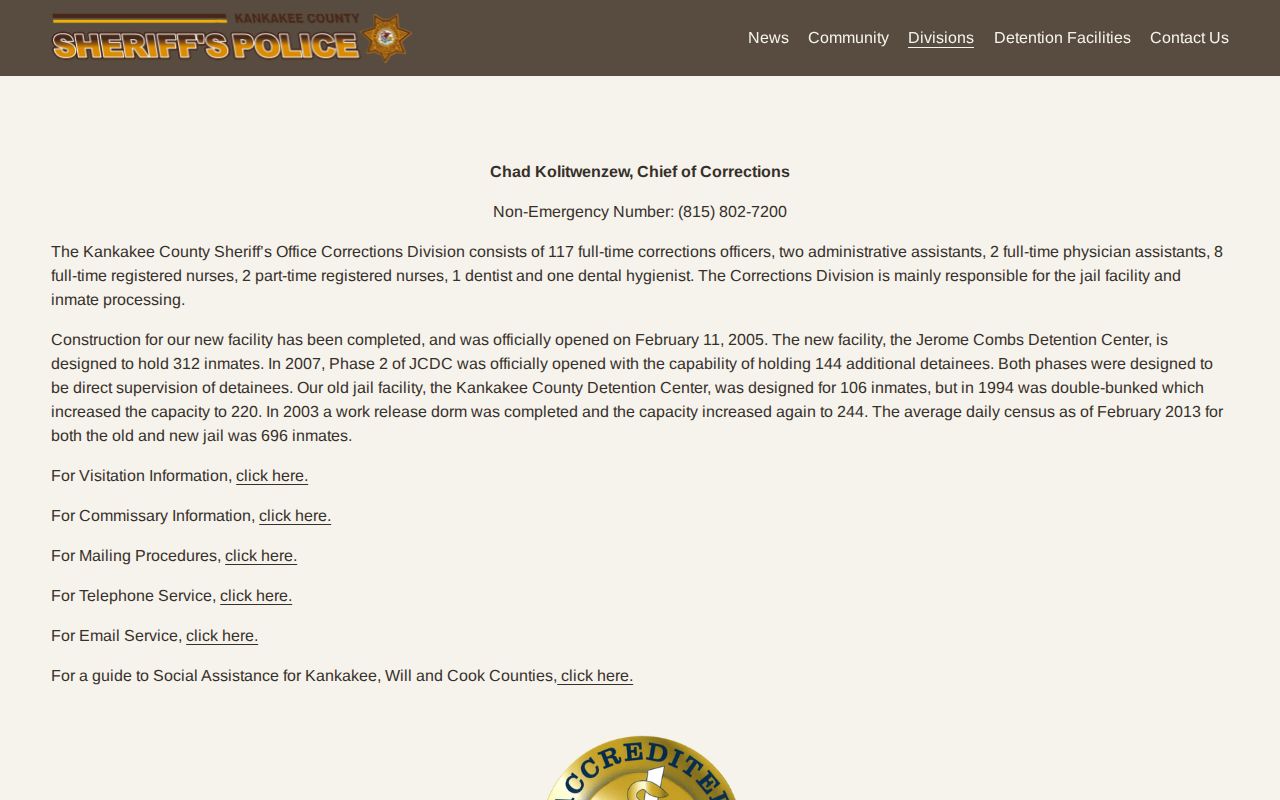
The official history supports treating KCJ as a real part of the local system rather than deleting it because one selector omits it.
Kankakee Jail Record Fields
When a Tyler detail is available, it can contain booking number and date, prisoner type, classification, housing facility, booking origin, charges, court date and room, docket, disposition, sentence information, arrest agency, bond fields, Release Date, and Scheduled Release Date. Results can also show whether the person is in custody and whether multiple bookings exist. The observed interface did not display a booking photograph.
The actual exit field is central. Under Illinois FOIA, specified chronological arrest information for an incarcerated person includes the date and time received, discharged, or transferred. A photo is listed when and if available. The law also permits defined exemptions, including some pending-case, safety, and facility-security grounds. Ask for segregable, nonexempt fields if part of a record is withheld.
The Tyler result screen illustrates why booking identifiers should be saved early.
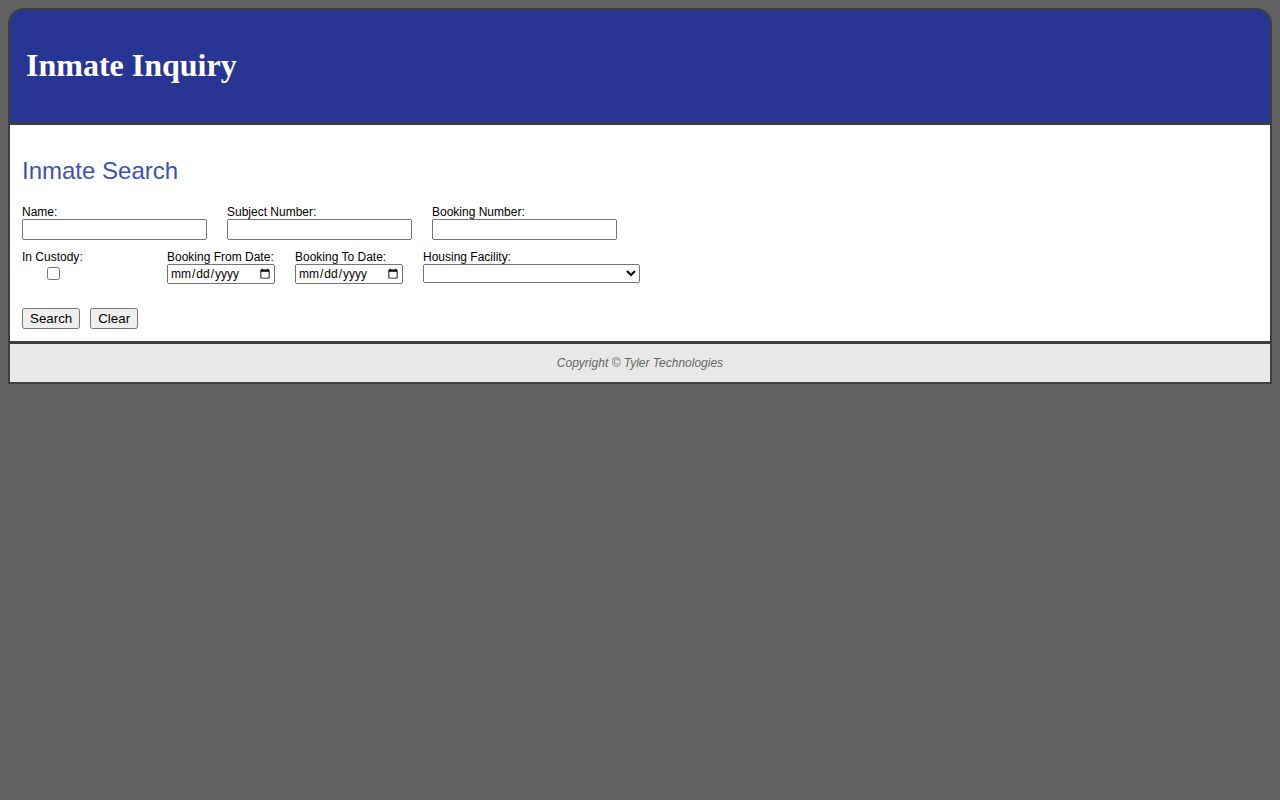
Those identifiers let records staff locate the closed event even when the live interface stops returning it.
Kankakee Jail Transfer Clues
A filed court mittimus points toward IDOC. Search the IDOC system after state intake posts and match Kankakee as the committing county in the sentence block. An IDOC admission is proof of continued state custody. Later, a Parole Date can show physical prison release to supervision, while Projected Discharge Date concerns the expected end of the commitment. Those dates should not be substituted for the earlier KCJ transfer timestamp.
If VINE says transfer, follow the named destination. For another county, use that sheriff. For federal movement, check the docket and contact USMS; use BOP only when the person entered BOP custody. A person may leave the Kankakee building but remain held by the same or another sovereign. The safest wording is “left Kankakee custody by transfer” until a community release is documented.
Kankakee Jail Federal Past
Kankakee’s detention history includes federal placements. The 2020 ICE inspection focused on Jerome Combs, where county, USMS, and ICE populations were documented. Older county-system records can therefore include a federal custodian even when the person slept in a local bed. The releasing authority may have been a federal court or immigration agency rather than the Sheriff.
That history must be dated. Illinois ended county ICE detention agreements, and the remaining local ICE detainees were transferred by February 4, 2022. It does not support any claim that KCJ or JCDC now operates as an ICE detention center. Historical ICE departures require ICE records; federal criminal custody requires the federal docket, USMS, or BOP as applicable.
After Kankakee Jail Release
A matching court order can describe pretrial release, dismissal, probation, sentence credit, or another legal basis. Court entries can remain accessible after the jail booking disappears. Still, they do not show the exact time jail staff executed the order or whether a separate hold delayed the exit. Resolve conflicts by checking the Sheriff timestamp and any receiving agency.
For a verified community discharge, Kankakee County’s code describes a Sheriff reentry coordinator who may arrange transitional services and aftercare. The ordinance does not guarantee a particular service for an individual. Confirm current availability with the Sheriff. The point is local: release can involve a handoff to community support, not merely removal from a roster.
Keep the final description narrow. “Released from Kankakee County custody” is supported by an actual discharge record. “Transferred from Kankakee County custody” is supported by a receiving agency. “No longer appears in the roster” is only an observation and should not be upgraded without more proof.
The old-jail alias should appear in a request because different official sources use Kankakee County Jail, Kankakee County Detention Center, KCJ, and KCDC. Include Jerome Combs as a possible related building when the housing field is unclear. Ask records staff to search by the person and booking number, not merely by the facility selector. That method addresses the documented gap between the 2024 inspection, which mentions both buildings, and the public selector, which showed only JCDC.
If a field is wrong, send correction evidence to its owner. The Sheriff controls county booking and movement data. The Circuit Clerk controls orders and judgments. IDOC controls state admissions and calculations. Request segregable fields if FOIA redacts part of the record, and follow the response’s appeal instructions when needed. A correction request differs from sealing or expungement, which follows a court process and does not simply rewrite an accurate historical custody event.