
Municipal Lockup Release Paths
Kankakee County contains municipal police agencies with their own short-term custody records. The relevant department may be a city or village police force rather than the Kankakee County Sheriff. After arrest, police may release a person under the legal process that applies to the case, transport the person to Jerome Combs Detention Center or Kankakee County Jail, or execute a warrant that sends the person to another agency. Each outcome ends the station hold differently.
The first task is to identify the arresting agency. Use the citation, incident number, court docket, or later booking record. Ask that agency whether it maintains a custody log, arrest report, property receipt, transport entry, or release record. If transport occurred, the receiving custodian’s admission record should continue the chain. A Sheriff roster result can confirm a later county booking, but its absence cannot prove a direct municipal release.
Confirm a Municipal Lockup Release
Start with the police agency named in the arrest or court record. Give the full name as recorded, approximate arrest date and time, incident number, and arresting officer or unit if known. Ask whether the person was released from the station or transported, the actual time the municipal hold ended, and the destination or receiving agency. Staff may limit telephone disclosure, so request the existing record when the exact event matters.
- Identify the arresting city or village police department.
- Request its custody, arrest, and transport entries for the event.
- Search the Circuit Clerk portal for the related docket and order.
- Check the Sheriff system for a later JCDC or KCJ booking.
- Follow any warrant or receiving agency named in the record.
The Kankakee County released-person search path is useful after a county booking appears. Do not start with IDOC unless a court commitment or later state record supports that route. Municipal detention is normally short-term, while IDOC is the statewide prison system for people committed by a court.
Municipal Lockup Court Records
The Kankakee Circuit Clerk public portal can preserve the case after the police hold ends.
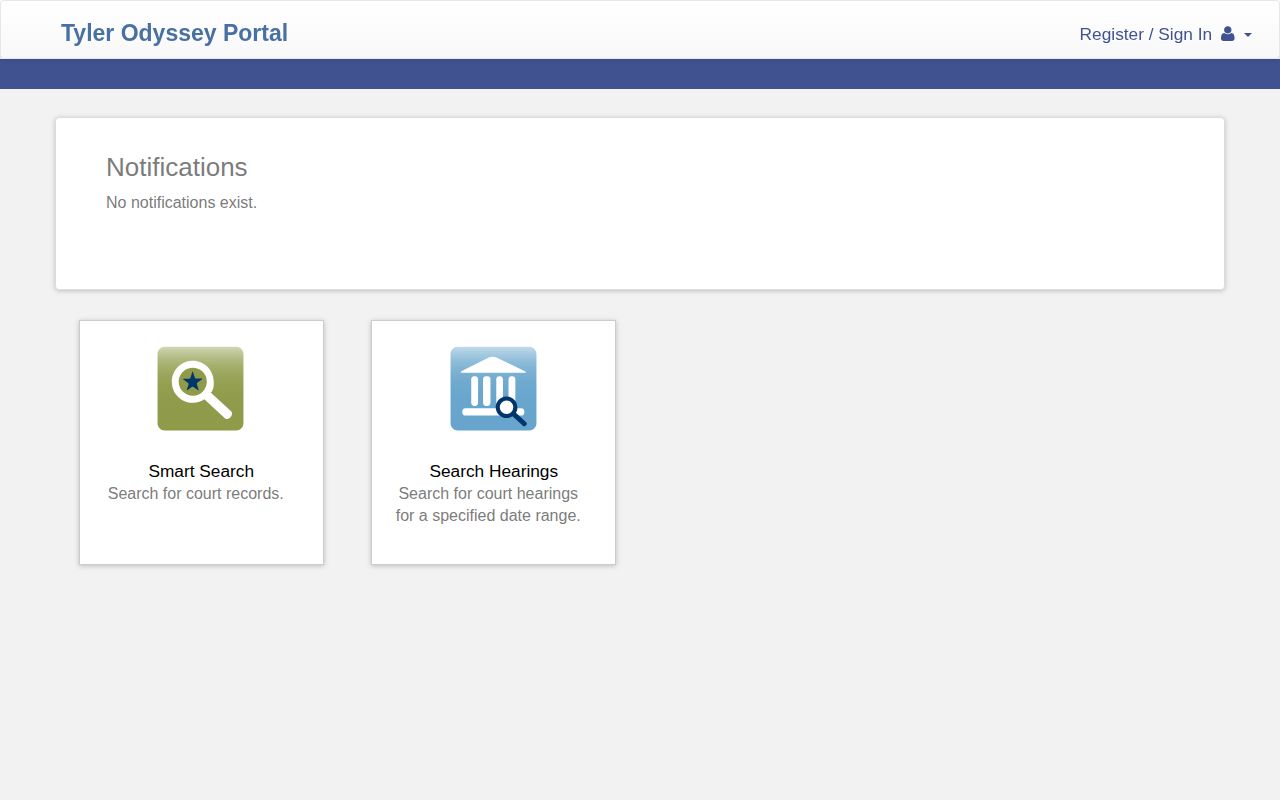
The docket may show a release order, detention decision, warrant, dismissal, sentence, or a mittimus directing state custody. It supplies legal context, but it is not the police station’s movement log.
Compare dates carefully. A judge’s order can precede the time police finish processing, and a separate warrant can prevent community release. If the docket and custody log appear to conflict, ask whether an intervening hold or transport explains the gap. Keep the actual police exit time distinct from the date the court filed an order.
Probation in a docket means a court sentence supervised in the community. It is not IDOC parole. A mittimus is an order sending the person to a jail or prison custodian. Neither term should be inferred from a name disappearing from an online list.
Municipal Lockup Record Requests
No centralized Kankakee County form was identified for all municipal police lockups. Address the request to the city or village agency that created the record and follow its current Illinois Freedom of Information Act instructions. Ask for the arrest and custody-log fields, time received, actual time released or transferred, release authority, transport destination, and receiving agency. Request a booking or arrest photograph only if that agency took one and it is available.
Use a narrow date range. Include the incident or report number and the person’s name as recorded. Ask for electronic copies of existing fields rather than asking staff to answer broad questions. Illinois FOIA identifies specified chronological arrest information, though defined pending-case, safety, and security exemptions can apply. If part is withheld, ask whether nonexempt fields can be separated and released.
The Sheriff’s FOIA instructions apply only when the Sheriff created the later county record.
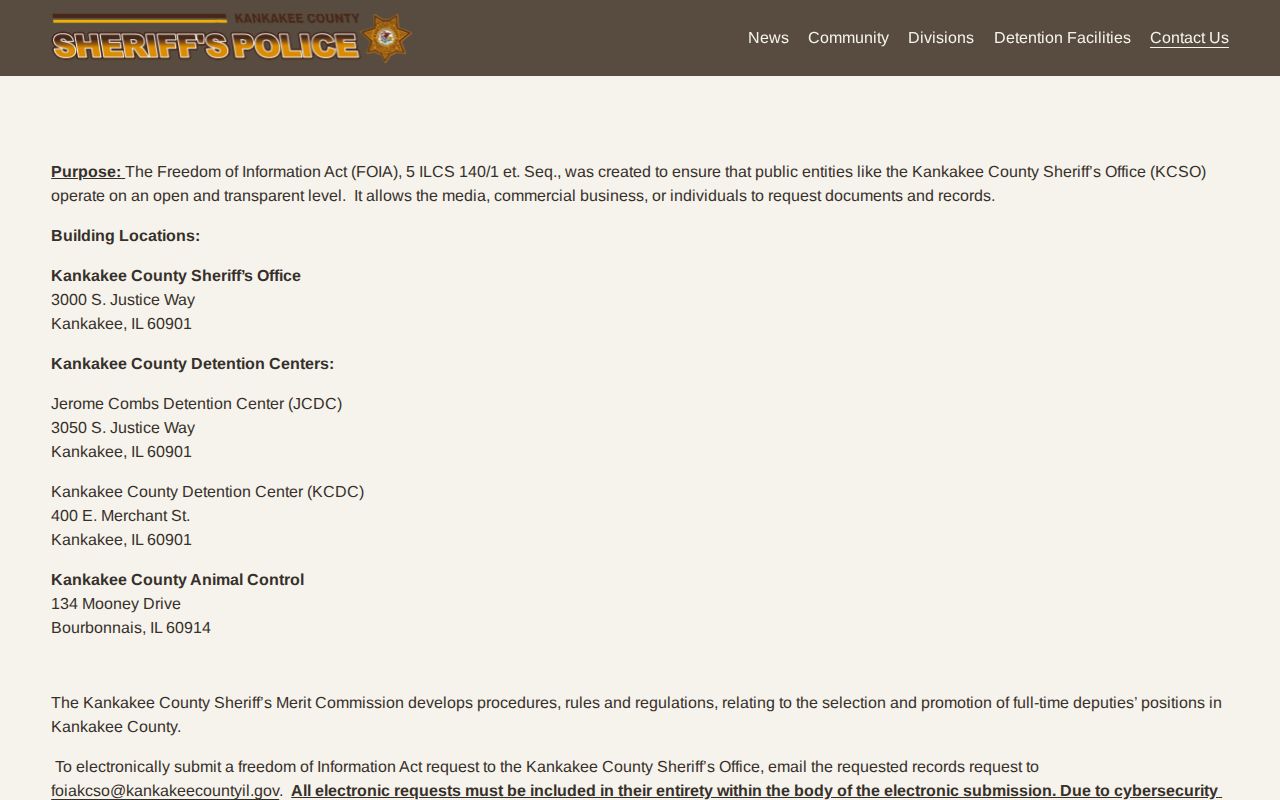
This county route is a second request when a municipal arrest led to JCDC or KCJ. It does not replace the originating police department’s file.
Municipal Lockup Contact Route
The Facility Map correctly lists the municipal contact as agency-specific. Research did not support one address, telephone number, or hours for all Kankakee County city and village lockups. Inventing a central lockup office would send requests to the wrong custodian. Identify the police department on the ticket, incident report, docket, or Sheriff booking origin and use that department’s official contact page.
Kankakee Municipal Police Lockups
Operator: relevant city or village police agency
Address
and phone: agency-specific
Record route: arresting agency
custody log and FOIA officer
If the department confirms transport to the Sheriff, Corrections can address present physical custody at 815-802-7200. The Sheriff system contact is 815-802-7100. Ask whether a county booking was created and preserve its subject and booking numbers. For transfer to another county, continue with that county’s sheriff instead.
Municipal Versus County Custody
The Tyler public-safety interface is the county Sheriff’s booking system. Its observed search controls include name, subject number, booking number, custody status, booking dates, and housing facility. Those fields are useful only if the municipal agency delivered the person into the Sheriff’s detention system. A person released from the station may never appear there.
When a county booking does exist, preserve the Release Date and Scheduled Release Date as separate labels. Scheduled Release Date can change. Release Date is the stronger completed-event field when populated. Research testing found the public search behaved mainly as a current-custody view, so a completed county booking may require Sheriff FOIA. The arresting department still owns the earlier municipal segment.
Municipal Transfer and Detainers
A municipal station may hold someone while officers confirm an outside warrant. If another county, USMS, ICE, or IDOC ultimately receives the person, the event is a transfer rather than a community release. A detainer is a request from another authority to hold the person or provide notice. Follow the named receiving agency and do not treat the station departure as freedom from custody.
The Kankakee detention system has historical federal context. JCDC held USMS and ICE populations in the past, but the county’s ICE arrangement ended and the remaining ICE detainees were transferred by February 4, 2022. That history can explain an old chain of custody. It does not support calling a municipal lockup or JCDC a current ICE detention site.
For present federal criminal custody, use the federal docket and USMS, then BOP when BOP custody applies. For immigration custody, use ICE. For a state commitment, use IDOC. The municipal custody record should point to the handoff; the receiving authority should prove what happened next.
Municipal Release Evidence Chain
A complete municipal release account may require three records. The police custody log establishes the station exit. The court docket explains the legal authority. A Sheriff or other receiving-agency record shows whether custody continued. VINE may provide a timely notice when a participating agency supplies the event, but it is a downstream notification service and not the legal custodian.
If the police log says released and no transfer or separate hold appears, describe release from that municipal agency. If it names JCDC, another jail, or federal authority, describe a transfer. When only the court file is available, say what the order provides and note that the physical processing time is not confirmed. A missing Sheriff result supports no conclusion about a station release.
This agency-by-agency method is slower than searching one countywide archive, but no such municipal archive was found. It respects who created each record and prevents a short police hold from being confused with county jail, state prison, or federal detention.
Municipal Release Record Corrections
If a municipal custody time appears wrong, send the evidence to the police department that created the log. A court order can support the legal sequence, while a Sheriff admission can show when county custody began. Neither office should be asked to alter another agency’s field. State the incident number, disputed value, proposed correction, and source document. Allow time for a corrected municipal record to reach any downstream notification system.
Sealing or expungement is a separate court process. Illinois Courts publishes approved forms, and the Kankakee court file controls the local proceeding. A record correction addresses inaccurate data; sealing or expungement addresses access under the law. Until an agency confirms a change, quote the existing record carefully and identify the source date.